
📖 Begin the Journey — Teaching Table of Contents
Welcome to the Still Becoming Teaching Page.
These teachings are organized to help you grow in the knowledge of Christ and walk in the wisdom of God.
Use this guide to explore the teaching series.
Teaching Series
🌿 Teaching Series: Still Becoming
A Bible teaching series for the believer who is growing, learning, and being shaped by Jesus.
📖 Teaching Series: The Virtue of Christ — The Life That Guides Us
A teaching series revealing how the virtues described in Proverbs ultimately point to the life and character of Jesus Christ.
Proverbs 31 is not calling us to admire one extraordinary woman. It is revealing the beauty of a life shaped by the wisdom of God. and the fullness of that wisdom is found in Jesus Christ, the Good Shepherd.
→ Back to Devotional Series
→ Explore Standalone Teachings
→ Return to Teachings Page
Teaching Series: Still Becoming
A 7-part Bible teaching series for the believer who is growing, learning, and being shaped
by Jesus.
Series Guide
Before we begin…
I’m sharing this revelation teaching the Lord has been showing me
— not as someone who has it all figured out, but as someone who is learning in real time with Jesus.
If you’re hungry to grow in the Word, I invite you to learn with me.
This series is for the believer who has been growing quietly, learning deeply, and realizing that obedience matters more than approval.
📖 Still Becoming — A 7-Part Bible Teaching Series
Note:
We are building and publishing this teaching series as we go. Please be patient with us — and check back as new parts are added. 🙏
Part 1 — The Word “But” (The Pivot)
Part 2 — Be (Identity in Christ)
Part 3 — An Example (Fruit as Proof)
Part 4 — To the Believers (The Hidden Key)
Part 5 — Word + Conduct
Part 6 — Love + Spirit
Later: See also🔗 Related Teaching: Iniquity
👉 (link to: [existing iniquity teaching page])
Later: I would like to share the testimony that I shared on Threads recently (and in comments on FB) about the stream Daniel found that come from under a root of a large Oak Tree.
🔗 Want to read the matching devotion?
✅ Return here anytime — this page will be updated as each part is added.
Part 1 — The Word “But” (The Pivot)
Don’t Disqualify Yourself Because You’re Still Becoming
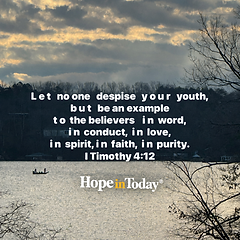
Key Scripture: 1 Timothy 4:12
There are seasons where you can feel “not ready.”
Not mature enough.
Not experienced enough.
Not qualified enough.
But in God’s kingdom, age does not determine authority — obedience does.
And the Lord is clear:
Don’t disqualify yourself because you’re still becoming.
That’s why this part begins with one word that changes everything:
“But.”
Before We Begin…
If you’re reading this, I want to speak to you as a fellow believer
— not from a place of perfection, but from a place of maturity that only comes through grace.
When I say maturity, I don’t mean I’ve “arrived.”
I mean I’ve overcome a lot
— not by willpower, but by learning how to surrender.
By learning how to trust the Lord.
By settling my heart to please God . . . and letting God handle people.
And I want to say this clearly:
It is not our Christian job to change people’s minds.
That belongs to God
— and to each individual person’s seeking to know Him, believe Him, and surrender to His will.
But it is our Christian duty to learn how to follow Jesus
— in truth and in spirit
— and to honor God in Biblical love
… even while we are still learning how.
That is what this teaching is about.
This is for the one who has ever felt “shot down” . . . dismissed for being young,
underestimated for still learning,
judged for mistakes made in the growing stages,
or rejected by those claiming Christ . . . but forgetting how to teach Christ.
And maybe it wasn’t even “the world” that hurt you.
Maybe it was people in the church.
People in positions. People with titles.
People who had knowledge . . . but forgot compassion.
So if you’ve ever felt left behind . . .
or rejected by the church . . .
or not “good enough” to belong . . .
I want you to hear this clearly:
Jesus does not disciple by shame.
He teaches by love.
He corrects by truth.
And He restores by grace.
Because Christianity is not pretending.
It’s becoming.
And sanctification isn’t instant — it’s a process of spiritual growth.
So if you are still becoming — this is for you.
Because in God’s kingdom:
age does not determine authority . . . obedience does.
Let’s grow together.
Love in Christ,
Karen
Hope in Today Ministries
“There is therefore now no condemnation to them which are in Christ Jesus…” (Romans 8:1)
Teaching - Part 1 — The Word “But” (The Pivot)
“Let no man despise thy youth; but be thou an example of the believers…”
1 Timothy 4:12
That one word — “but” — is a pivot.
God is acknowledging something real:
People may look down on you.
People may misunderstand you.
People may judge you too quickly.
But He does not tell you to react to them.
He tells you to pivot.
“Let no man despise thy youth…”
…but be an example.
Meaning: even if they despise you, you don’t have to live in reaction.
You don’t have to perform.
You don’t have to strive.
You don’t have to fight for your place.
You have a choice in how you respond.
You cannot control people’s opinions — but you can control your posture.
This is what “but” means:
Change your focus.
Stop staring at what people think.
Start walking in what God says.
“But” introduces a higher standard:
Don’t fight their opinions — outgrow them with your obedience.
And this is important:
Obedience is not pride.
Obedience is surrender.
It is saying:
“Lord, I will follow You even if I’m not understood.”
“I will keep my spirit clean.”
“I will keep learning.”
“I will keep growing.”
“I will keep obeying.”
Because spiritual authority is not proven by age.
It is proven by fruit.
Jesus said:
“By their fruits ye shall know them.”
Matthew 7:16
So the pivot is not into arguing.
The pivot is into becoming.
Not becoming loud.
Becoming faithful.
Not becoming impressive.
Becoming obedient.
Not becoming approved by people.
Becoming anchored in Jesus.
That’s the beginning of spiritual maturity.
Heart Check
Am I reacting to what people think… or responding to what God says?
Have I been trying to prove myself instead of obeying Jesus?
Where is the Lord asking me to pivot — and follow Him with peace?
Prayer
Father, help me stop staring at opinions and start walking in obedience.
Teach me how to pivot toward Your voice with a clean heart and a steady spirit.
Make my life an example — not for performance, but for Your glory.
In Jesus’ name, Amen.
Part 2 — Be (Identity in Christ)
Don’t Disqualify Yourself Because You’re Still Becoming
Have you ever felt like you’re still “becoming” — and that somehow disqualifies you?
Like you’re not mature enough, not ready enough, or not spiritual enough yet?
But the Lord doesn’t tell you to prove yourself.
He tells you one powerful word:
Be.
Teaching
“Let no man despise thy youth; but be thou an example…”
1 Timothy 4:12 (KJV)
In Part 1, the Lord showed us the pivot word: “but.”
Now we step into what that pivot points toward:
✅ Be.
Not “try.”
Not “prove.”
Not “perform.”
Be.
This is where many believers struggle
— not because they don’t love God, but because they still think spiritual maturity comes from approval.
But the Word of God teaches something different:
In God’s kingdom, your authority does not come from age.
It does not come from being “seen.”
It does not come from titles or opinions.
Spiritual authority comes from identity — and identity is formed through obedience.
When Paul says, “Be an example,” he’s not telling Timothy to strive harder.
He’s saying:
Timothy,
Decide who you are in Christ
— and live from that place.
Because “Be” means:
-
choose your posture
-
take your place
-
walk like you belong to Jesus
-
let your life become a witness before you ever open your mouth
This is not arrogance.
This is agreement.
It is agreeing with what God says about you… even if people don’t see it yet.
And this is powerful:
You don’t have to be fully formed to be faithful.
You don’t have to be perfect to be obedient.
You don’t have to wait until everyone understands you to follow Jesus with confidence.
This is what God is saying:
Don’t disqualify yourself because you are still becoming.
Be means you stop living as if you need permission from people to obey God.
Be means:
“I belong to Jesus.”
“I will obey Him.”
“I will grow.”
“I will learn.”
“I will remain teachable.”
“I will keep my spirit clean.”
“I will keep walking forward.”
And that right there — is maturity.
Because maturity is not “knowing everything.”
Maturity is:
staying surrendered
staying obedient
staying humble
staying faithful
Even when you feel young.
Even when you feel unseen.
Even when you feel misunderstood.
So Part 2 is a holy charge:
Stop trying to become what people approve of.
Start becoming what Jesus is forming.
Because when God says “Be,” He is not demanding perfection.
He is calling you into identity.
And identity is the soil where fruit grows.
Heart Check
Am I living from my identity in Christ… or from insecurity?
Am I trying to prove myself to people instead of obeying God?
Where is Jesus asking me to “be” steady, faithful, and surrendered — even while I’m still learning?
Prayer
Father, thank You that my identity is in Christ — not in opinions.
Teach me how to be steady, surrendered, and faithful.
Help me stop striving for approval and start walking in obedience.
Form Christ in me as I grow, so my life becomes an example of Your grace.
In Jesus’ name, Amen.
Part 3 — An Example (Fruit as Proof)
Don’t Disqualify Yourself Because You’re Still Becoming
You don’t have to win arguments to prove you belong to Jesus.
You don’t have to defend yourself to earn spiritual respect.
In God’s kingdom, one thing speaks louder than opinions:
Fruit.
Teaching
“Let no man despise thy youth; but be thou an example…”
1 Timothy 4:12 (KJV)
Part 3 brings us to one of the strongest words in this verse:
✅ An example.
An example means:
a pattern,
a model,
a visible imprint.
Not a show.
Not performance.
Not trying to appear spiritual.
It means your life becomes something others can see and learn from.
This is why Paul did not tell Timothy to fight for his place.
He didn’t say:
“Correct them.”
“Convince them.”
“Prove them wrong.”
He said:
Be an example.
Because Timothy didn’t have to win arguments.
He just had to live visibly.
And this is one of the most freeing truths in spiritual growth:
People may doubt your age…
but they cannot deny your fruit.
Fruit is the evidence of what is real.
Jesus said it clearly:
“By their fruits ye shall know them.”
(Matthew 7:16)
So what does that mean for you?
It means if people despise you…
you don’t have to react.
You don’t have to defend.
You don’t have to strive.
You can let your life become the proof.
This is God’s way:
Let fruit speak louder than insecurity.
Because fruit doesn’t come from striving.
Fruit comes from abiding.
And the closer you walk with Jesus…
the more your life will quietly demonstrate what your mouth doesn’t have to.
The enemy wants young believers to feel disqualified.
The enemy wants them to shrink back.
The enemy wants them to believe:
“If you’re not fully formed, you don’t belong.”
But Jesus calls the growing believer forward and says:
Stay with Me.
Learn of Me.
Follow Me.
And fruit will come.
That’s why spiritual authority cannot be faked.
Fruit cannot be manufactured.
Fruit is produced by the Spirit.
So let your life become the proof.
Not proof of you…
proof of Jesus in you.
And this is the kind of example that strengthens the body of Christ:
-
consistent
-
humble
-
steady
-
faithful
-
clean in spirit
-
obedient even while learning
That is a powerful witness.
And over time, it answers critics without a single argument.
Because a surrendered life carries something people can’t deny.
Heart Check
Have I been trying to defend myself instead of abiding in Jesus?
Do I believe fruit will speak… even if people misunderstand me for a season?
Where is the Lord calling me to stop striving and simply stay faithful?
Prayer
Father, teach me how to abide in Jesus so my life produces true fruit.
Deliver me from insecurity and the need to prove myself.
Make me steady, humble, and faithful — an example of Your grace.
Let my life become the proof that You are real.
In Jesus’ name, Amen.
🔗 Back to Series Guide
👉 (link to: start-here-still-becoming)
🔗 Next: Part 4 — To the Believers (The Hidden Key) — Coming Soon
👉 (link will go to: still-becoming-part-4 once created)
Part 4 — To the Believers (The Hidden Key)
Don’t Disqualify Yourself Because You’re Still Becoming
Sometimes the deepest wounds aren’t from unbelievers…
They come from people in the church.
But Jesus sees you — and He never meant His body to become the place you bleed.
Teaching
“Let no man despise thy youth; but be thou an example of the believers…”
1 Timothy 4:12 (KJV)
There is a phrase in this verse that most people skip over
— but it holds a hidden key: “to the believers.”
Paul is not first talking about how Timothy should impress the world.
He is talking about how Timothy should strengthen the body of Christ.
This is important because many believers assume the hardest opposition will come from “out there.”
But often, for the young believer — or the believer still growing — the first wounds come from inside the church.
Not from atheists.
Not from culture.
Not from the world.
But from believers who forgot compassion.
Believers who forgot what it feels like to be in the beginning stages.
Believers who have knowledge… but not gentleness.
And Paul is saying something powerful:
Timothy, do not let their despising shape your identity.
Don’t become bitter.
Don’t become rebellious.
Don’t become loud.
Don’t become hardened.
Instead —
be an example to the believers.
Meaning: do not let church hurt steal your surrender.
Because if the enemy can wound you inside the church, he will try to convince you:
-
you don’t belong
-
you’re not wanted
-
you’re not good enough
-
you should stop growing
-
you should stop serving
-
you should stop showing up
But Jesus never said the weak don’t belong.
Jesus never said the stumbling can’t follow Him.
Jesus never said growth disqualifies you.
He said:
“Come unto me . . . ”
And the Word shows us His posture:
“A bruised reed shall he not break…”
(Matthew 12:20)
So if you’ve ever felt bruised in church…
if you’ve ever felt left behind…
if you’ve ever felt rejected by people who claim Christ…
Hear this truth:
The answer is not to leave Jesus.
The answer is to see Jesus.
Because Jesus is not like man.
And man’s failure does not cancel God’s love.
Paul is calling Timothy to a higher kind of maturity:
Not maturity that fights for position…
but maturity that stays surrendered.
Not maturity that demands respect…
but maturity that earns trust through consistency.
Paul is saying:
Timothy, don’t fight your place — live so faithfully that trust forms over time.
Because spiritual authority is not grabbed.
It is grown.
And it is grown in the same place where many believers are tempted to quit:
in the unseen,
in the misunderstood season,
in the lonely obedience,
in the heart-pruning stages.
This is what heals broken hearts:
When you realize Jesus saw it…
Jesus knew it…
Jesus was with you in it…
and He is still calling you forward.
So yes — this verse includes the young believer…
but it also speaks to spiritual newness:
the believer still learning,
still growing,
still being formed.
Paul is teaching the body of Christ something too:
Don’t despise believers in the beginning stages.
Don’t crush what God is shaping.
Because the same Jesus who is sanctifying you…
is sanctifying them.
And when we remember that, the church becomes a place of healing — not harm.
So in this part, the Lord is showing us something holy:
If people hurt you in the church, don’t let it destroy your faith.
Let it refine your surrender.
Let it deepen your dependence on Jesus.
Let it purify your love.
And let it teach you what kind of believer you will become:
not one who wounds the weak…
but one who strengthens them.
Because you know what it feels like to be despised…
and Jesus taught you how to stay surrendered anyway.
Heart Check
Have I been wounded by believers and tempted to withdraw from Jesus?
Have I been tempted to harden instead of heal?
Where is Jesus calling me back to His heart — so I can grow without bitterness?
Prayer
Jesus,
You are the Head of the Church
— and You see every hurt place.
Heal what people bruised.
Restore what man misunderstood.
Keep me surrendered and soft before You.
Teach me how to follow You even when believers fail me.
And make me an example
— not one who wounds, but one who strengthens.
In Your holy name, Amen.
2 Corinthians 4:8–9 (KJV)
“We are troubled on every side,
yet not distressed;
we are perplexed,
but not in despair;
Persecuted,
but not forsaken;
cast down,
but not destroyed.”
A Word for the Wounded Believer
If you have ever felt crushed, misunderstood, or bruised by people
— I want you to pause and let this Scripture lift off the page for your heart:
“We are troubled on every side, yet not distressed; we are perplexed, but not in despair;
Persecuted, but not forsaken; cast down, but not destroyed.”
2 Corinthians 4:8–9 (KJV)
Even if people failed you…
you are not forsaken.
Even if you were cast down…
you are not destroyed.
Jesus sees you.
And He is able to heal what man mishandled.
You may be wounded — but you are still becoming.
Part 5 — Word + Conduct
Don’t Disqualify Yourself Because You’re Still Becoming
Your words reveal what’s in your heart.
And your conduct proves what you believe.
God is not forming a performance — He’s forming a witness.
Teaching
“Be thou an example of the believers, in word, in conduct…”
1 Timothy 4:12 (KJV)
Part 5 brings us into two areas that must agree if we are going to grow strong in Christ:
✅ In word
✅ In conduct
Because your mouth and your life are meant to match.
Many believers want to be respected spiritually
— but Paul shows us the real pathway:
Spiritual credibility is not demanded.
It is built.
And it is built through:
-
what we say
-
and how we live
In Word
“In word” includes:
-
your speech
-
your tone
-
your honesty
-
your restraint
-
your confession
Words matter spiritually.
Scripture says:
“Death and life are in the power of the tongue…”
(Proverbs 18:21)
“Let your speech be alway with grace…”
(Colossians 4:6)
“Let no corrupt communication proceed out of your mouth…”
(Ephesians 4:29)
Your words are not just communication
— they are spiritual expression.
They reveal:
-
maturity
-
humility
-
patience
-
pride
-
peace
-
faith
And “word” is also what you confess.
Romans 10:9 is connected here:
Confessing Jesus as Lord is not shallow — it forms identity.
So part of becoming an example is learning how to speak like you belong to Christ:
-
truth over exaggeration
-
grace over harshness
-
light over sarcasm
-
restraint over reaction
-
Because your mouth reveals your maturity.
In Conduct
“In conduct” is your lifestyle:
-
decisions
-
consistency
-
integrity
-
discipline
-
behavior when nobody sees
-
Conduct is what makes your words believable.
James says:
“Be ye doers of the word, and not hearers only…”
(James 1:22)
Conduct shows up in:
-
how we treat people
-
how we respond under pressure
-
our work ethic
-
our humility
-
our boundaries
-
our consistency
This is important:
You can talk right and live wrong.
And people will feel the difference.
But when your conduct matches your confession, your life becomes a witness.
Paul is saying:
Timothy — don’t just preach right.
Live right.
Not perfect — but surrendered.
Not trying to look spiritual — but walking in truth.
Because in God’s kingdom, people can reject your age…
but they cannot deny your consistency.
This is how God matures us:
He trains our words…
and He shapes our conduct…
until both reflect Jesus.
And that is how we become examples.
Heart Check
Does my tone reflect Jesus, even when I’m frustrated?
Do my words build people up or reveal impatience in me?
Does my conduct match my confession — even when nobody sees?
Prayer
Father,
Sanctify my mouth and my lifestyle.
Teach me to speak with grace, truth, and restraint.
Shape my conduct so my life matches my confession.
Make me an example in word and in conduct
— steady, humble, and sincere.
In Jesus’ name, Amen.
Part 6 — Love + Spirit
Don’t Disqualify Yourself Because You’re Still Becoming
Love is not what we claim
— it’s what we carry.
And sometimes what hurts the most isn’t wrong doctrine…
It’s a wrong spirit.
Teaching
“Be thou an example of the believers… in love, in spirit…”
1 Timothy 4:12 (KJV)
Part 6 brings us into two areas that reveal true spiritual maturity:
✅ In love
✅ In spirit
Because Christianity is not just truth spoken…
It is Christ lived.
And Paul is showing us something that cannot be skipped:
You can be right in words…
and wrong in spirit.
You can have knowledge…
and lack love.
You can quote scripture…
and still operate out of pride, harshness, or control.
But Jesus never trained disciples that way.
In Love
Paul says, “Be an example… in love.”
This is not emotional love.
This is Christ-love.
Biblical love shows up when:
-
you don’t retaliate
-
you forgive
-
you bless instead of curse
-
you honor others
-
you don’t manipulate
-
you’re patient
-
you serve
Jesus taught us that love is not proven by what we say…
Love is proven by how we respond.
Scripture says:
“By this shall all men know that ye are my disciples, if ye have love one to another.”
(John 13:35)
So love is not optional.
Love is evidence.
And this is important for wounded believers to hear:
A believer who has been hurt is often tempted to harden.
But Jesus heals us so we can love again
— without losing discernment.
Love does not mean you allow abuse.
Love does not mean you remove boundaries.
Love means your heart stays clean even while you stay wise.
And a young believer who learns love is more mature than an older believer who walks in pride.
In Spirit
Then Paul says, “Be an example… in spirit.”
This means:
-
your inner disposition
-
what you carry
-
the spirit you operate in
It’s not just what you do.
It’s what flows through you.
This is why someone can say the right words…
but make people feel crushed.
That is not Jesus.
Jesus is truth…
but He is also gentleness.
Jesus is correction…
but He is also compassion.
The Bible says:
“The fruit of the Spirit is love, joy, peace…”
(Galatians 5:22)
So “in spirit” includes:
-
gentleness
-
humility
-
reverence
-
peace
-
meekness
-
discernment
-
obedience to the Holy Ghost
-
and the Lord’s help to control self
This is maturity:
When your spirit stays submitted.
When you don’t let irritation lead.
When you don’t let offense control you.
When you don’t let pride rise.
Because the spirit you carry speaks before you ever speak.
Paul is telling Timothy:
Let them feel Jesus from you
— not ego.
So Part 6 calls us to something holy:
Not just right words…
but a right spirit.
Not just biblical knowledge…
but Christlike love.
Because when love and spirit are clean…
your life becomes a safe place for others to grow.
And the wounded believer begins to heal…
not by learning arguments…
but by seeing Jesus.
Heart Check
Do I love like Jesus when I’m misunderstood?
Is my spirit gentle… or am I carrying offense?
Do people feel lifted toward Christ after being around me?
Prayer
Father,
Teach me to love like Jesus.
Heal what has hardened me.
Purify what has wounded me.
Make my spirit clean, gentle, and submitted to the Holy Ghost.
Let the fruit of the Spirit
be evident in my life.
And make me an example
— in love and in spirit — so others can see Jesus and heal.
In Jesus’ name, Amen.
Part 7 — Faith + Purity
Don’t Disqualify Yourself Because You’re Still Becoming
Faith keeps you steady when the world shakes.
Purity keeps you clear when emotions rise.
If you want to hear God clearly and walk strong — these two matter.
Teaching
“Be thou an example of the believers… in faith, in purity.”
1 Timothy 4:12 (KJV)
Part 7 brings us to the final two areas Paul names
— and they are not small.
✅ In faith
✅ In purity
Because faith anchors you…
and purity clears you.
And when you are still becoming, these two are what keep you from being tossed around by feelings, opinions, pressure, or fear.
In Faith
Paul says: be an example in faith.
Faith is not just belief — it is trust in action.
Faith shows up in:
-
prayer
-
endurance
-
obedience
-
courage
-
surrender
Faith is what keeps you steady when your circumstances are not.
Faith says:
“I don’t understand everything… but I trust God.”
Faith says:
“I may be learning… but I am not quitting.”
Faith says:
“I may be young in growth… but I am anchored.”
Scripture says:
“Without faith it is impossible to please him…”
(Hebrews 11:6)
So faith is not about being loud.
Faith is about being steady.
It is the ability to keep walking with God even while you are still becoming.
And this is what wounded believers need to know:
Your faith is not proven when life is easy.
Your faith is proven when you stay surrendered.
When you keep praying.
When you keep obeying.
When you keep trusting.
When you keep showing up.
Even while you are healing.
Even while you are growing.
Even while you are still becoming.
In Purity
Then Paul says: be an example in purity.
Purity means:
-
clean motives
-
clean conscience
-
clean hands
-
clean heart
Not just sexual purity
— whole-life purity.
Purity is the place God trusts.
Scripture says:
“Blessed are the pure in heart: for they shall see God.”
(Matthew 5:8)
Purity is spiritual clarity.
Impurity clouds discernment.
Purity sharpens hearing.
Purity keeps the heart from becoming double-minded.
And this is powerful:
The wisdom that comes from above is first pure.
That means when God is leading you, His wisdom doesn’t leave you confused in your spirit.
Purity keeps you clear enough to recognize:
-
conviction vs condemnation
-
warning vs fear
-
correction vs rejection
-
truth vs emotion
And one of the most beautiful things about Jesus is this:
He does not slam His children down.
He lifts us up.
He corrects, but He covers.
He convicts, but He heals.
He exposes, but He restores.
So purity does not mean perfection.
Purity means your heart stays open.
Your motives stay honest.
Your conscience stays clean.
Your life stays submitted.
And when faith and purity work together, this happens:
You become steady…
and you become clear.
You become anchored…
and you become able to hear.
You become an example not by striving…
but by surrender.
So here is the ending point of this whole series:
Don’t disqualify yourself because you’re still becoming.
Be an example.
Let fruit speak louder than insecurity.
Listen for the Lord to speak to your inner heart.
Read His Word to hear His voice speaking to your heart too.
And remember:
God gently lifts us up — He does not slam us down.
“There is therefore now no condemnation to them which are in Christ Jesus…”
(Romans 8:1)
My motto for my life is:
“I don’t have it all figured out, BUT God does … FOLLOW JESUS.”
Love in Christ,
Karen
Hope in Today Ministries
Heart Check
Am I trusting God in action — or only in theory?
Where do I need to surrender again so faith can grow?
Is my heart staying pure — open, honest, and teachable before God?
Prayer
Father,
Strengthen my faith to trust You fully
— even while I’m still becoming.
Purify my heart, my motives, my thoughts, and my desires.
Keep me steady when life shakes,
and keep me clear when emotions rise.
Make me an example — in faith and in purity — so others can see Jesus through my life.
In Jesus’ name, Amen.
A Heart Insight the Lord Showed Me
The Lord showed me something in a deeply important time
— and it may be useful to you today:
“The wisdom that comes to us from above is first of all pure, which means it doesn’t leave us double-minded about wanting God’s help in changing our mind.”
I changed my mind that day, and I am so glad that I did.
I hope this is a blessing to you too.
“But the wisdom that is from above is first pure…”
James 3:17 (KJV)
🔗 Back to Series Guide
👉 (link to: start-here-still-becoming)
⬇️ (Later) Bonus — Sin vs Iniquity
(Later to do )🔗 Related Teaching: Iniquity👉 (link to: [existing iniquity teaching page])
Bonus Teaching — Infirmity vs Sin
Knowing the Difference Changes Everything
Some believers are carrying guilt Jesus never gave them.
They think weakness is the same as rebellion.
But the Bible makes a clear difference
— and understanding it can change everything.
Bonus Teaching — Infirmity vs Sin
Knowing the Difference Changes Everything
There is a difference between infirmity and sin, and many believers suffer in unnecessary shame because they don’t know the difference.
Understanding this brings freedom.
Because Jesus does not condemn infirmity — He meets it with mercy.
But sin must be repented of — because sin separates us from truth.
Both require Jesus… but they are not the same.
✅ 1) Infirmity = weakness (not guilt)
Infirmity means:
-
weakness
-
limitation
-
struggle
-
human frailty
It can include:
-
emotional immaturity
-
fear
-
lack of knowledge
-
physical weakness
-
areas still being healed
The Bible says Jesus understands infirmity:
“…touched with the feeling of our infirmities…”
(Hebrews 4:15)
That means when you are weak…
Jesus is not disgusted with you.
He is touched.
He understands.
The Bible also says:
“The spirit indeed is willing, but the flesh is weak.”
(Matthew 26:41)
So infirmity is not something we shame.
It is something we bring to Jesus for strengthening.
And what does Jesus invite us to do?
“Let us therefore come boldly unto the throne of grace,
that we may obtain mercy, and find grace to help…”
(Hebrews 4:16)
✅ Infirmity is met with mercy + help.
Not condemnation.
✅ 2) Sin = transgression (guilt / rebellion)
Sin is different.
Sin is not weakness — sin is disobedience.
The Bible defines sin:
“Sin is the transgression of the law.”
(1 John 3:4)
Sin includes:
-
willfully choosing what God forbids
-
resisting conviction
-
loving darkness rather than light
-
refusing truth when you know better
Scripture also says:
“To him that knoweth to do good, and doeth it not, to him it is sin.”
(James 4:17)
✅ Sin requires repentance — not just healing.
Because repentance is the turning of the heart back to God.
✅ 3) The major difference
Here is the simplest Biblical way to say it:
✅ Infirmity says: “I can’t.” (I need strengthening)
✅ Sin says: “I won’t.” (I need repentance)
That is the cleanest difference.
And this matters, because:
If you treat infirmity like sin… you will live in shame.
But if you treat sin like infirmity… you will stay bound.
So the Lord teaches us discernment:
Some things in us need compassion and discipleship.
Some things need repentance and truth.
And BOTH need Jesus — but they are not the same thing.
✅ 4) The bridge that ties it all together
Here is what’s powerful:
God does not shame weakness.
He strengthens it.
“My grace is sufficient for thee: for my strength is made perfect in weakness.”
(2 Corinthians 12:9)
But God does confront sin…
because He loves us too much to leave us in it.
“As many as I love, I rebuke and chasten…”
(Revelation 3:19)
So the ending point is this:
God gently lifts us up — He does not slam us down.
“There is therefore now no condemnation to them which are in Christ Jesus…”
(Romans 8:1)
Heart Check
Have I been calling my weakness “sin” and living under shame?
Have I been resisting conviction in an area God wants me to surrender?
What do I need today — mercy for infirmity, or repentance from sin?
Prayer
Father,
Thank You that Jesus understands my infirmities.
Thank You for mercy where I am weak,
and grace to help me grow.
Show me what is infirmity that needs healing and strengthening.
And show me what is sin that needs repentance and surrender.
I want truth, freedom, and purity
— not shame.
Teach me to walk in the light and follow Jesus fully.
In Jesus’ name, Amen.
🔗 Back to Series Guide
👉 (link to: start-here-still-becoming)
🔗 Return to Part 7 — Faith + Purity
👉 (link to: still-becoming-part-7)
⬇️ (Later) Bonus — Sin vs Iniquity
(Later to do )🔗 Related Teaching: Iniquity
👉 (link to: [existing iniquity teaching page])
Bonus Teaching — Sin vs Iniquity
When a Pattern Becomes a Stronghold
Sometimes we don’t just struggle with a moment…
We struggle with a pattern.
And the Bible has a word for that — iniquity.
Bonus Teaching — Sin vs Iniquity
When a Pattern Becomes a Stronghold
Many believers understand the word sin, but fewer understand the Bible’s word iniquity.
And because they don’t understand it, they often live in one of two extremes:
-
constant shame
or -
constant excusing
But the Lord doesn’t want either.
He wants freedom.
So let’s learn the difference biblically.
✅ 1) Sin = a transgression
Sin is a willful act of disobedience
— a trespass against God’s truth.
The Bible says:
“Sin is the transgression of the law.”
(1 John 3:4)
Sin can happen in:
-
words
-
thoughts
-
actions
-
motives
Sin is serious.
But the good news is this:
Sin is not stronger than the blood of Jesus.
When sin is confessed and repented of, it is forgiven and washed.
“If we confess our sins, he is faithful and just to forgive us our sins, and to cleanse us from all unrighteousness.”
(1 John 1:9)
So sin is real — but so is redemption.
✅ 2) Iniquity = a bent, a pattern, a deep inner distortion
Iniquity goes deeper than a single sin.
Iniquity is what happens when sin becomes a pattern
— and that pattern begins shaping the inner man.
Iniquity can include:
-
generational brokenness
-
long-term rebellion
-
repeated compromise
-
heart distortion
-
learned ways of thinking that oppose truth
-
cycles that keep returning
Iniquity is not only what you do…
it becomes what you are bent toward.
And this matters:
Because some believers love God,
but still feel pulled by something deeper.
They may say:
“Why do I keep returning to this?”
“Why do I keep thinking this way?”
“Why does my heart keep bending toward darkness?”
That’s often not just sin…
That is iniquity — a pattern that has formed a spiritual stronghold.
✅ 3) Sin can be forgiven
— iniquity must be uprooted
This is where the gospel becomes powerful.
Sin is forgiven through repentance.
But iniquity is healed through:
-
truth
-
deliverance
-
deep repentance
-
renewal of the mind
-
and sanctification over time
-
This is why some believers are forgiven… but still feel bound.
Because forgiveness is instant
— but transformation is a process.
This is why David prayed in Psalm 51:
He didn’t only confess sin.
He asked God to deal with what was underneath it.
“Wash me throughly from mine iniquity, and cleanse me from my sin.”
(Psalm 51:2)
Did you see that?
David mentioned both.
Because sin is the act.
Iniquity is the root system.
And Jesus doesn’t only forgive acts.
He heals roots.
✅ 4) Jesus came to break patterns, not just pardon moments
This is why the Cross is not only forgiveness.
It’s freedom.
Jesus didn’t die just to cover what you did.
He died to break what holds you.
The Bible says:
“He was wounded for our transgressions, he was bruised for our iniquities…”
(Isaiah 53:5)
That means:
-
transgressions = outward acts
-
iniquities = deeper distortions
Jesus was bruised for the deep places too.
Not just what you did…
but what happened to you.
Not just what you chose…
but what shaped you.
Not just the sin…
but the “bent.”
So iniquity is not hopeless.
It is healable.
✅ 5) Why this matters for the believer
This teaching will keep your heart from two traps:
Trap #1: Treating iniquity like a small sin
Then you stay stuck.
Trap #2: Treating iniquity like you’re beyond hope
Then you live ashamed.
But the truth is:
✅ Jesus forgives sin.
✅ Jesus heals iniquity.
✅ Jesus restores the soul.
And this is what sanctification looks like:
God doesn’t just correct behavior.
He transforms the heart.
So if you recognize patterns in your life, don’t despair.
Don’t hide.
Bring it into the light.
Because God is not only willing to forgive.
He is willing to heal.
Heart Check
Is there a repeated pattern in my life God wants to uproot?
Am I living in shame over what Jesus wants to heal?
Have I truly surrendered the root — not just the fruit?
Prayer
Father,
Thank You that Jesus not only forgives sin
— He heals iniquity.
I bring my patterns into the light.
Show me the root. Heal the distortion. Renew my mind.
Break every cycle that opposes Your truth.
Wash me, restore me, and form Christ in me deeply.
I want freedom
— not just forgiveness.
In Jesus’ name, Amen.
“If you see a pattern, don’t panic — that means God is revealing what He plans to heal.”
🔗 Back to Series Guide
👉 (link to: start-here-still-becoming)
🔗 Return to Bonus 1 — Infirmity vs Sin
👉 (link to: still-becoming-bonus-infirmity)
(Later to do )🔗 Related Teaching: Iniquity👉 (link to: [existing iniquity teaching page])
📖 Teaching Series: The Virtue of Christ — The Life That Guides Us
Series Guide
Before we begin…
I’m sharing this revelation teaching the Lord has been showing me
— not as someone who has it all figured out, but as someone who is learning in real time with Jesus.
If you’re hungry to grow in the Word, I invite you to learn with me.
This series is for the believer who has been growing quietly, learning deeply, and realizing that obedience matters more than approval.

The Virtue of Christ — The Life That Guides Us
Series Introduction
This teaching series explores how the virtues described throughout Proverbs 31 ultimately point beyond human achievement to the perfect character of Jesus Christ.
Rather than presenting an unreachable model of virtue, Scripture reveals that the fullness of wisdom, strength, compassion, and righteousness is perfectly fulfilled in Christ.
As believers abide in Him, His life forms these same virtues within us over time.
📖 John 15:5
“I am the vine, ye are the branches: He that abideth in me, and I in him, the same bringeth forth much fruit: for without me ye can do nothing.”
↩ Return to Series Table of Contents
The Virtue of Christ — Series Introduction
The book of Proverbs speaks often about wisdom, virtue, and the character of a life that honors God. One of the most well-known passages, Proverbs 31, is frequently read as the description of an extraordinary woman.
Yet when we step back and read the whole of Scripture, we begin to see something even deeper.
The beauty of Proverbs is not merely pointing us to a human example to imitate—it is revealing the character of a life shaped by the wisdom of God. And the fullness of that wisdom is perfectly revealed in Jesus Christ.
Jesus is the living expression of every virtue Scripture praises:
• reverence for the Father
• faithfulness and care for others
• humility and sacrificial strength
• wisdom in speech
• compassion for the broken
• works that testify of righteousness
Every one of these virtues is seen fully in Him.
📖 Colossians 2:3
“In whom are hid all the treasures of wisdom and knowledge.”
Because Christ lives in those who believe, the Christian life is not about striving to imitate a perfect standard by our own strength. Instead, it is about abiding in Him, allowing His character to grow within us over time.
📖 John 15:5
“I am the vine, ye are the branches: He that abideth in me, and I in him, the same bringeth forth much fruit.”
This series explores how the virtues described in Proverbs ultimately point to the life of Christ, and how that same life continues to guide and shape those who walk with Him.
↩ Return to Series Table of Contents
📖 **The Virtue of Christ — The Life That Guides Us**
Teaching Line for the Series
“Proverbs 31 is not calling us to admire one extraordinary woman.
It is revealing the beauty of a life shaped by the wisdom of God — and that wisdom is fully revealed in Jesus Christ.”
📖 Teaching Series: The Virtue of Christ — The Life That Guides Us
A teaching journey revealing how the virtues described in Proverbs are perfectly fulfilled in Jesus Christ, and how His life forms those same virtues in us as we abide in Him.
Table of Contents
Key Verse: Proverbs 31:30
“Favor is deceitful, and beauty is vain: but a woman that feareth the Lord, she shall be praised.”
Teaching Focus:
The fear of the Lord is the true foundation of wisdom and virtue.
Christ Connection:
Jesus perfectly walked in reverence and obedience to the Father.
📖 John 8:29
“And he that sent me is with me: the Father hath not left me alone; for I do always those things that please him.”
Anchor Verse: John 10:11
“I am the good shepherd: the good shepherd giveth his life for the sheep.”
Connection to Proverbs 31
The passage describes a life that blesses others through:
• Faithfulness
• Trustworthiness
• Care for others
Just as Proverbs describes someone who strengthens her household and community, Jesus shepherds His people with perfect care.
Key Verse: Proverbs 31:25
“Strength and honour are her clothing.”
Christ reveals true spiritual strength through:
• Humility
• Obedience
• Sacrificial love
📖 Philippians 2:8
“And being found in fashion as a man, he humbled himself, and became obedient unto death, even the death of the cross.”
Key Verse: Proverbs 31:26
“She openeth her mouth with wisdom.”
Jesus spoke with perfect authority and wisdom.
📖 Matthew 7:28–29
“And it came to pass, when Jesus had ended these sayings, the people were astonished at his doctrine:
For he taught them as one having authority, and not as the scribes.”
5. Compassion for the Poor and Broken
Key Verse: Proverbs 31:20
“She stretcheth out her hand to the poor.”
Jesus continually reached the forgotten and suffering.
📖 Matthew 9:36
“But when he saw the multitudes, he was moved with compassion on them.”
Key Verse: Proverbs 31:31
“Let her own works praise her in the gates.”
Christ’s works testify of who He is.
📖 John 10:25
“The works that I do in my Father’s name, they bear witness of me.”
Instead of Proverbs 31 pointing to one extraordinary woman, this teaching reveals something deeper.
The truth revealed in Christ:
1️⃣ Jesus is the perfect expression of wisdom and virtue.
2️⃣ Believers become fruitful by abiding in Him.
3️⃣ His character grows within us over time.
📖 John 15:5
“He that abideth in me, and I in him, the same bringeth forth much fruit.”
Teaching Line (Series Theme)
“Proverbs 31 is not calling us to admire one extraordinary woman.
It is revealing the beauty of a life shaped by the wisdom of God —
and the fullness of that wisdom is found in Jesus Christ, the Good Shepherd.”
SECTION 1 — The Source of the Virtue
Key Verse: Proverbs 31:30
📖 Proverbs 31:30 (KJV)
“Favour is deceitful, and beauty is vain: but a woman that feareth the LORD, she shall be praised.”
Where This Study Truly Begins
Before we study the virtues described in Proverbs 31, we must pause and ask an important question:
Where do these virtues come from?
Many people read Proverbs 31 as a list of achievements —
a picture of the “perfect woman” who works hard, manages her home, serves others, and speaks wisdom.
But Scripture points us to something deeper.
The true foundation of this chapter is not human ability.
It is the fear of the Lord.
The virtues described in Proverbs are not meant to produce pressure or comparison.
They are meant to reveal something far greater:
The character of God reflected in a life that reveres Him.
The Source of True Virtue
Proverbs 31:30 reveals the key:
“A woman that feareth the LORD, she shall be praised.”
The fear of the Lord does not mean terror.
It means:
• reverence
• humility
• trust
• surrender to God's wisdom
It is the posture of a heart that recognizes:
God is the source of all goodness, wisdom, and righteousness.
When a person lives in this posture, something beautiful begins to happen.
The virtues described in Proverbs begin to grow naturally — not as forced behavior, but as the fruit of a heart aligned with God.
Proverbs Pointing Beyond Human Strength
This is why Proverbs ultimately points beyond human effort.
The wisdom found in Scripture is not simply advice for living.
It is a pathway that leads us to the One who perfectly embodies every virtue.
Jesus Christ.
Scripture itself confirms this truth:
📖 Luke 24:27
“Beginning at Moses and all the prophets, he expounded unto them in all the scriptures the things concerning himself.”
All of Scripture — including Proverbs — ultimately points to Him.
Jesus is not only the teacher of wisdom.
He is the source of it.
A Different Way to Read Proverbs 31
Instead of asking:
“How can I achieve this?”
We can begin by asking:
“What does this reveal about the heart of God?”
As we study the virtues described in Proverbs 31, we will see something remarkable:
Each one reflects a quality perfectly fulfilled in Christ.
What begins as wisdom literature becomes something even greater.
It becomes a portrait of the character of God revealed through Jesus.
A Quiet Invitation
The invitation of Proverbs is not to strive harder.
It is to draw nearer to the Lord.
Because the closer we walk with Him, the more His character begins to shape our lives.
The virtues of wisdom, kindness, diligence, and strength grow not through pressure —
but through relationship with the One who is their source.
Next in the Study
In the next section, we will begin exploring the virtues themselves and how each one reflects the wisdom of God.
And as we continue, we will see how Proverbs ultimately leads us to one person:
Jesus Christ — the true source of wisdom and virtue.
↩ Return to Series Table of Contents
This truth brings us to something even deeper.
If the fear of the Lord is the source of true virtue, then we must ask another question:
What does the heart of that virtue look like?
When we look to Jesus, we begin to see the answer.
The wisdom of Scripture is not cold instruction. It is the expression of a Shepherd’s heart — a heart that guides, protects, and cares for those who belong to Him.
The virtues described in Proverbs begin to take shape when we see them through the character of Christ Himself.
This leads us to the next reflection in our study.
The Shepherd’s Heart.
SECTION 2 — The Shepherd's Heart
The Character Behind the Virtues
📖 John 10:11 (KJV)
“I am the good shepherd: the good shepherd giveth his life for the sheep.”
The Heart Behind True Virtue
The virtues described in Proverbs are not merely behaviors to imitate.
They reflect the heart of the One who embodies them perfectly.
Jesus describes Himself in a powerful way:
“I am the good shepherd.”
A shepherd does more than lead.
A shepherd watches.
A shepherd protects.
A shepherd provides.
A shepherd lays down his life for his flock.
This is the kind of heart that produces the virtues we see described in Proverbs.
Virtue Shaped by Love
When we begin to understand the Shepherd’s heart, we see that true virtue is never rooted in pride or performance.
It grows from love.
The shepherd’s strength is not harsh authority.
It is patient guidance.
The shepherd’s wisdom is not distant knowledge.
It is personal care.
And the shepherd’s leadership is not self-serving.
It is sacrificial.
This is the heart of Christ.
Seeing Proverbs Through the Shepherd
When we read Proverbs through the life of Jesus, something beautiful happens.
The virtues of wisdom, diligence, compassion, and strength begin to look less like human achievements and more like reflections of the character of God.
The shepherd’s heart gives meaning to the virtues.
It shows us that wisdom is not simply knowing what is right.
Wisdom is learning to walk in the care and guidance of the One who leads us.
A Shepherd Who Knows His Sheep
The Shepherd does not call from a distance.
He knows His sheep.
He walks with them.
And He guides them gently into truth.
This is why the wisdom of Proverbs ultimately leads us not to a list of virtues, but to a relationship with the One who perfectly embodies them.
Jesus Christ.
↩ Return to Series Table of Contents
SECTION 3 — The Strength of Christ
The Power Behind a Life of Virtue
📖 Philippians 4:13 (KJV)
“I can do all things through Christ which strengtheneth me.”
The Strength Behind the Virtues
When we begin to understand the virtues described in Proverbs, it is natural to wonder how anyone could live this way.
Wisdom, compassion, diligence, patience, and kindness all require a kind of strength that goes beyond simple human effort.
Scripture teaches us something important here.
The life of virtue is not sustained by our own strength.
It is sustained by the strength of Christ.
Strength That Comes Through Christ
The apostle Paul expresses this clearly when he writes:
“I can do all things through Christ which strengtheneth me.”
This verse is often misunderstood as a promise of unlimited ability.
But Paul’s message is actually about dependence.
He is describing the strength that comes from living a life rooted in Christ.
The believer does not rely on personal power alone.
Instead, we learn to draw strength from the One who walks with us.
His strength steadies us when we feel weak.
His wisdom directs us when we are uncertain.
His presence sustains us through every season.
The Strength of the Shepherd
This strength reflects the heart of the Good Shepherd.
The world often defines strength as dominance or control.
But the strength of Christ is different.
His strength serves.
His strength protects.
His strength restores.
And ultimately, His strength was revealed in the greatest act of love — laying down His life for His sheep.
This is the strength that shapes the life of virtue.
Strength That Grows Through Abiding
As we remain connected to Christ, His strength begins to form our character.
The virtues described in Proverbs do not appear overnight.
They grow slowly as we walk with the Lord.
The more we abide in Him, the more His life begins to shape our own.
This is how wisdom becomes visible in everyday life.
Looking Ahead
One of the clearest places where the strength of Christ becomes visible is in the way we speak.
Words have the power to encourage, to guide, and to reveal the condition of the heart.
Scripture teaches that wisdom is often recognized through the words we choose.
This leads us to the next reflection in our study:
Wisdom in Speech.
↩ Return to Series Table of Contents
📖 **The Virtue of Christ — The Life That Guides Us**
SECTION 4 — Wisdom in Speech
The Voice of Wisdom Shaped by Christ
📖 Proverbs 31:26 (KJV)
“She openeth her mouth with wisdom; and in her tongue is the law of kindness.”
The Power of Words
One of the most visible expressions of wisdom is found in the way a person speaks.
Words carry great power.
They can build up or tear down.
They can guide or mislead.
They can bring peace or stir conflict.
Scripture teaches that wisdom is often revealed through speech.
When a life is shaped by reverence for God, the heart begins to produce words that reflect truth, patience, and kindness.
Words That Reflect the Heart
Jesus taught that our words reveal something deeper about the condition of the heart.
📖 Matthew 12:34 (KJV)
“For out of the abundance of the heart the mouth speaketh.”
This means that wise speech is not simply about choosing the right words.
It begins with a heart that is being shaped by God.
When the heart is rooted in Christ, wisdom naturally begins to guide the way we speak.
The Kindness of Wisdom
Proverbs describes something beautiful here:
“The law of kindness is in her tongue.”
Wisdom does not speak harshly or carelessly.
Instead, wisdom speaks with grace.
Kindness does not mean avoiding truth.
Rather, it means speaking truth in a way that reflects the heart of Christ.
Jesus demonstrated this balance perfectly.
He spoke truth with authority, yet His words consistently invited people toward life and restoration.
Learning to Speak with Wisdom
As we grow in our walk with Christ, our speech begins to change.
We become slower to react and quicker to listen.
We learn to pray before speaking.
We begin to understand that words guided by wisdom can bring peace into difficult situations.
This is another way the strength of Christ becomes visible in our lives.
Looking Ahead
Wisdom expressed through speech naturally leads to another important virtue found in Scripture.
When the heart is shaped by Christ, it begins to notice those who are hurting and in need.
Compassion becomes a natural response.
This leads us to the next reflection in our study:
Compassion for the Poor and Broken.
↩ Return to Series Table of Contents
📖 **The Virtue of Christ — The Life That Guides Us**
SECTION 5 — Compassion for the Poor and Broken
The Heart of Christ for Those in Need
📖 Proverbs 31:20 (KJV)
“She stretcheth out her hand to the poor; yea, she reacheth forth her hands to the needy.”
Compassion That Reflects the Heart of Christ
One of the clearest signs of a life shaped by God is compassion for those who are suffering.
Proverbs describes a person whose heart is attentive to the needs of others.
“She stretcheth out her hand to the poor.”
This picture reveals more than generosity.
It reveals a heart that notices the broken places around it.
True virtue is never self-focused.
It turns outward.
And when we look at the life of Jesus, we see this compassion everywhere.
The Compassion of the Shepherd
Jesus repeatedly showed deep concern for those who were hurting.
📖 Matthew 9:36 (KJV)
“But when he saw the multitudes, he was moved with compassion on them…”
The Good Shepherd does not overlook the weary.
He sees them.
He understands their burdens.
And He responds with mercy.
This is the same heart reflected in the virtues described throughout Proverbs.
A Compassion That Acts
Biblical compassion is not only a feeling.
It moves us to action.
To stretch out a hand means:
• noticing those in need
• offering help when possible
• extending kindness and dignity
The compassion of Christ reminds us that every person carries value before God.
When we walk closely with the Lord, His heart begins to shape the way we see others.
Reflecting the Shepherd’s Care
As we grow in our relationship with Christ, we begin to reflect His care for people.
We become more aware of suffering around us.
We become slower to judge and quicker to show mercy.
And compassion begins to guide the way we respond to the brokenness we encounter in the world.
This is another way the character of Christ becomes visible in the life of a believer.
Looking Ahead
The virtues described in Proverbs continue to point us toward something deeper.
When a life is rooted in Christ, wisdom, strength, compassion, and kindness begin to produce visible fruit.
Scripture reminds us that the work of God within us always leads to fruit that blesses others.
This leads us to the next reflection in our study:
The Fruit of His Work.
↩ Return to Series Table of Contents
SECTION 6 — The Fruit of His Work
The Visible Evidence of a Life Rooted in Christ
📖 Proverbs 31:31 (KJV)
“Give her of the fruit of her hands; and let her own works praise her in the gates.”
Fruit That Reveals the Root
Throughout this study we have seen how the virtues described in Proverbs point beyond human effort to the character of Christ.
When a life is rooted in reverence for God, shaped by the Shepherd’s heart, strengthened by Christ, guided in speech by wisdom, and moved by compassion, something beautiful begins to appear.
Fruit.
Fruit is the visible result of an unseen root.
Just as a healthy tree naturally produces fruit in its season, a life connected to Christ begins to show the evidence of His work within.
The Work of God in Us
Scripture teaches that the transformation we experience is not something we produce alone.
It is the work of God forming His character within us.
📖 John 15:5 (KJV)
“I am the vine, ye are the branches: He that abideth in me, and I in him, the same bringeth forth much fruit.”
Jesus reminds us that fruitfulness comes from abiding in Him.
The branch does not create life on its own.
It receives life from the vine.
In the same way, the virtues we see growing in our lives are the result of Christ working through us.
Fruit That Speaks Without Words
Proverbs tells us that the fruit of a person’s life will eventually speak for itself.
“Let her own works praise her in the gates.”
In ancient cities, the gates were places where people gathered, decisions were made, and reputations became known.
This verse reminds us that the character shaped by God will become visible over time.
Not through self-promotion.
But through the quiet testimony of a life lived faithfully before the Lord.
The Beauty of a Life Formed by Christ
The virtues described in Proverbs—wisdom, strength, compassion, diligence, and kindness—are not meant to become a checklist for perfection.
They are the natural fruit of a life that walks closely with God.
As we abide in Christ, His character slowly begins to shape our own.
And the fruit of His work becomes visible in the way we live, serve, and love others.
Looking Ahead
As we reach the end of this study, we return to the central truth that has guided us from the beginning.
The virtues described in Proverbs ultimately point us beyond ourselves.
They point us to Christ.
In the final section, we will reflect on the beauty of this truth and consider what it means to live a life that reflects
His character.
This brings us to the closing reflection of our series:
The Beautiful Conclusion.
↩ Return to Series Table of Contents
📖 **The Virtue of Christ — The Life That Guides Us**
SECTION 7 — The Beautiful Conclusion of the Series
The Beauty of Christ Revealed
📖 Proverbs 31:30 (KJV)
“Favour is deceitful, and beauty is vain: but a woman that feareth the LORD, she shall be praised.”
Returning to the Beginning
As we come to the close of this study, we return to the verse that first opened our reflection.
“Favour is deceitful, and beauty is vain.”
The world often measures worth through appearance, recognition, and outward success.
But Scripture gently reminds us that these things are temporary.
True beauty is found somewhere deeper.
It is found in a life that reveres the Lord.
Seeing Proverbs in a New Light
When we began this study, we asked an important question.
Where do the virtues described in Proverbs come from?
As we walked through the Shepherd’s heart, the strength of Christ, wisdom in speech, compassion for the broken, and the fruit of His work, a beautiful truth began to emerge.
These virtues are not simply human achievements.
They are reflections of the character of Christ.
Proverbs points us beyond ourselves to the One who perfectly embodies wisdom, compassion, and righteousness.
Jesus Christ.
The Beauty of a Life Shaped by Christ
When a person walks closely with the Lord, something remarkable begins to happen.
His character slowly forms within us.
Wisdom begins to guide our words.
Compassion begins to shape our actions.
Strength begins to steady our steps.
And over time, the quiet fruit of His work becomes visible.
This is the beauty Scripture celebrates.
Not perfection.
But transformation.
A Life That Reflects the Shepherd
The Good Shepherd continues to guide His people today.
He teaches us.
He strengthens us.
He walks beside us through every season of life.
And as we remain connected to Him, His character begins to shine through our lives in ways we may not even notice.
The virtues described in Proverbs are not distant ideals.
They are the living expression of Christ’s work within us.
The Invitation
The invitation of Scripture is simple and profound.
Walk with the Lord.
Abide in Christ.
Allow His wisdom to guide your steps.
As we do, the virtues described in Proverbs become more than words on a page.
They become the quiet fruit of a life shaped by the One who is the true source of wisdom.
Jesus Christ.
We hope this series has been a blessing to you, and we believe it will be because of the One who put this life into the seed. We are simply sowing the seed and trusting God to work in each of our hearts.
God cares for you. This is a place to begin believing.
Learning to live in the invisible means recognizing that life eternal is found in believing in God as our Father and Creator, and trusting in the Son who has come to be both our Savior and our Lord.
Jesus is revealed to our hearts so that we may know Him as the Christ.
Love in Christ,
Karen
Hope in Today Ministries, Inc.
May the Lord continue to guide your heart as you learn to live in the invisible and walk by faith in Christ.
↩ Return to Series Table of Contents
📖 **The Virtue of Christ — The Life That Guides Us**